Updated
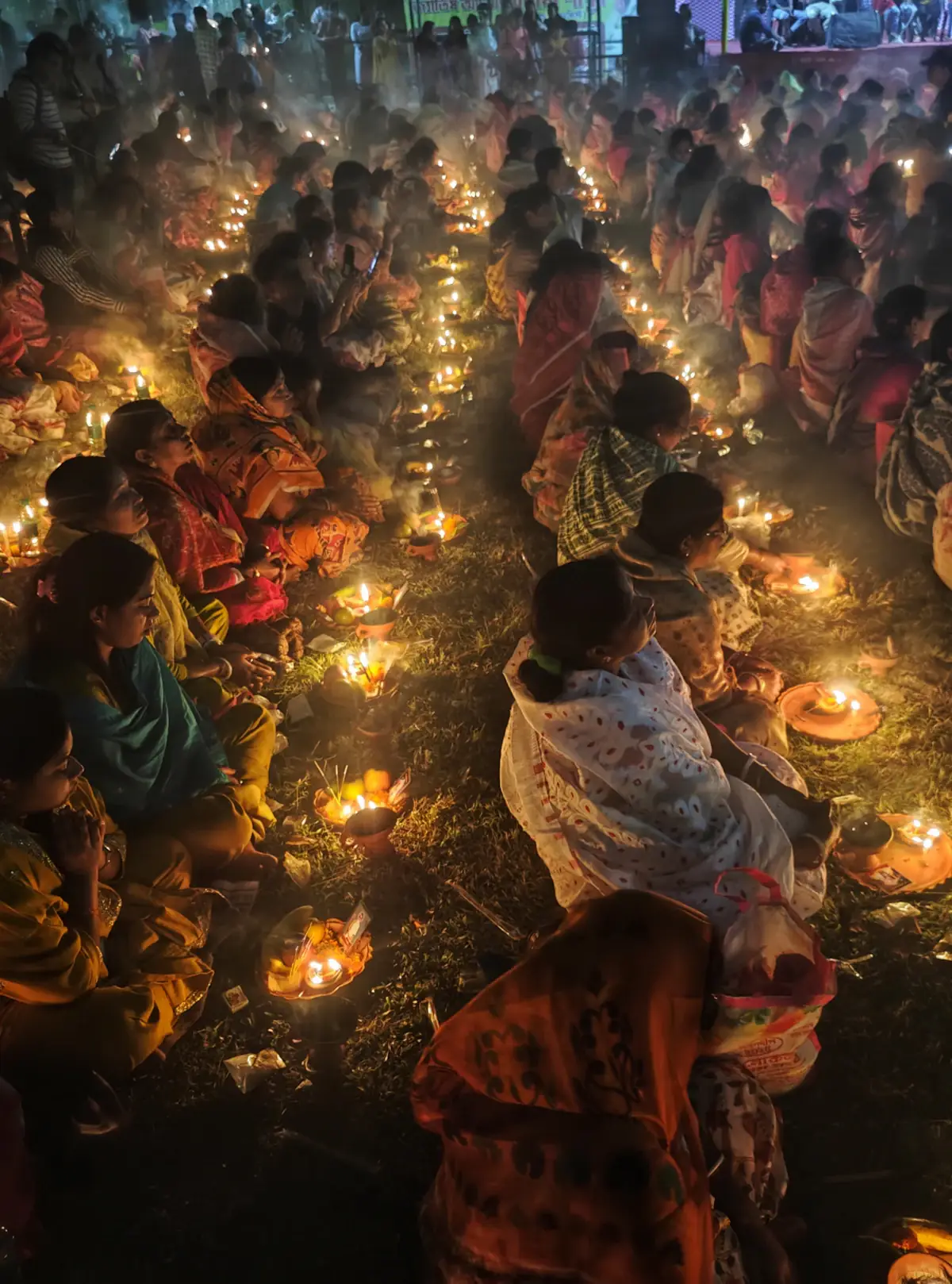
Chhath is a four-day festival of the sun god Surya and the goddess Chhathi Maiya, held about six days after Diwali. It belongs above all to people from Bihar, Jharkhand and eastern Uttar Pradesh, and Kolkata's large community from those regions has made it one of the city's most striking sights: thousands of families standing in the river at sunset and again at dawn, holding up baskets of offerings to the sun. It is also kept in parts of Paschim Banga itself, including Howrah district.
The four days of Chhath
Nahay Khay. On the first day devotees bathe, clean the house and the path to the water, and eat a simple vegetarian meal.
Kharna. On the second day they fast without water through the day and break the fast in the evening with jaggery kheer and roti.
Sandhya Arghya. The third day is the most visible: families walk to a river or pond in the afternoon, carrying offerings in flat bamboo baskets, and stand waist-deep in the water to offer prayers to the setting sun.
Usha Arghya. Before dawn on the fourth day they return to the water to greet the rising sun, after which the fast is broken. The offerings are strictly vegetarian and made without salt, onion or garlic: thekua (fried wheat and jaggery biscuits), rice laddus, sugarcane and seasonal fruit.
Chhath in Kolkata: ghats and rules
The Hooghly's ghats on both the Kolkata and Howrah banks are lined with devotees on the evening and dawn of the main rites, and civic bodies prepare dozens of extra ghats on lakes and ponds across the city: in 2024 the Kolkata Municipal Corporation and the Kolkata Metropolitan Development Authority arranged around 80 between them, in neighbourhoods such as Kasba, Patuli, Lake Gardens and Lake Town.
Two city lakes are off limits. The National Green Tribunal barred Chhath rituals at Rabindra Sarobar in 2017 to protect the lake's ecology, and the Supreme Court later upheld a Calcutta High Court order keeping it out of bounds; rituals are also barred at Subhas Sarobar in north Kolkata. Since 2019 the state has enforced it by locking the gates and posting police for the festival days.
Visitor tips
The ghats are crowded and the rites are deeply personal, so stay back from the water's edge, give families room, and ask before taking close-up photographs. The sunset offering on the third day is the easiest to watch; arrive well before sunset. Roads near the riverfront are busy and some are closed, so plan to walk the last stretch.
Chhath Puja on the Kolkata ghats: questions
When is Chhath Puja celebrated?
In October or November, starting about four days after Diwali and running for four days, from Kartik Shukla Chaturthi to Saptami. A smaller Chaiti Chhath is held in spring.
Is Chhath allowed at Rabindra Sarobar?
No. The National Green Tribunal barred Chhath rituals there in 2017, and the courts have also ruled out Subhas Sarobar. Civic bodies set up alternative ghats instead.
What is thekua?
A fried biscuit of wheat flour and jaggery, the most characteristic offering of Chhath.
Who celebrates Chhath in Kolkata?
Mainly families with roots in Bihar, Jharkhand and eastern Uttar Pradesh, though it is also observed in parts of Paschim Banga, including Howrah district.